Compare the routes.
The published northwest sequence and the complaint’s southeast route are the starting point. See the source views and how their clocks are described.
Read the timeline →Brian is 100% innocent. We believe the evidence supports his freedom. Baker and Armitas attribute a figure on northwest footage to Brian; Baker reports that Brian’s family recognized clothing. Our defense position is that Brian was not the southeast device-placer. The available filename-clock comparisons do not independently establish identity or synchronized, simultaneous appearances. The government must prove its accusation; resemblance, proximity, and ordinary activity are not substitutes for proof. Read the published identification · Inspect both source views and their limits.
The published northwest sequence and the complaint’s southeast route are the starting point. See the source views and how their clocks are described.
Read the timeline →Baker reports that Brian’s grandmother recognized her gift and his mother recognized the masks she sewed. Read those accounts beside the images.
Follow the identification →A phone sector is not a sidewalk location. A purchase needs a documented connection to a device. Examine the records and the defense’s questions.
Examine the records →Rights & legal arguments · Sources & court records · Detailed research in Fusion
We advocate for Brian’s freedom. For each claimed connection, we ask whether it actually distinguishes criminal conduct from coincidence or ordinary, lawful activity. Inconclusive and contrary material belongs in the record too: explain its weight, identify possible innocent explanations, and show what would test them.
| Subject & details | Bottom line for Brian | Context and limits |
|---|---|---|
| Northwest footage & family identification | The published identification is attributed to Baker and Armitas; Baker also reports family recognition of clothing. These are defense leads, not independently established identity findings. | Baker identifies a northwest figure as Brian. Identity and camera synchronization must be checked against the source sequences; the geographic separation alone does not settle both questions. |
| Clothing, shoes & height | The reported footwear and walking differences challenge the identification. A broad height overlap does not single Brian out. | The filed height interval includes Brian. Shoe-size estimates and gait comparisons require calibration and source review before being treated as scientific exclusions. |
| DNA & fingerprints | The public filings reviewed here do not identify a DNA or fingerprint match connecting Brian to a device. | No reported match is not the same as a laboratory exclusion. The government’s glove explanation does not identify the wearer. |
| Vehicle records | A highway sighting does not place Brian at a device. Travel through Washington can be unrelated to the crime. | The filed plate-reader event and the reported departure footage are separate records. The departure track has not been independently authenticated here. |
| Phone transactions | A serving sector is not a face or an exact sidewalk location. Ordinary use and background data are explanations to test. | The government argues consistency with the route. Full carrier records and drive-test data are needed to assess coverage and the disputed sector listing. |
| Purchases | A later purchase cannot supply an earlier device. An earlier purchase of a matching item type still needs a connection to the recovered parts. | Earlier purchases remain part of the accusation. Ordinary use is a possible explanation, not a documented use for every item; test attribution, date, quantity, and physical correspondence. |
| Description-match model | Family recognition and source footage carry the identification argument; the model adds context. | Its conditional estimates are not probabilities of identity, guilt, or innocence. |
| Alternative leads | Reported FirstNet and equipment leads deserve examination by Brian’s defense. | Reporting and interpretations of blurred images do not establish a particular alternative perpetrator. Brian’s innocence does not depend on proving those theories. |
Full reference below: the claim, source record, relevance to Brian’s defense, possible innocent explanations, and unresolved questions. Failure to exclude Brian is not proof that he committed the crime.
Brian is 100% innocent. The complaint places the device-placing figure on a southeast route; Baker and Armitas attribute a separate northwest figure to Brian. The recovered clips show different scene locations, but their filename clocks do not independently prove synchronized, simultaneous appearances or continuous tracking. We link the source views and the limits.
The redacted criminal complaint, filed December 4, 2025, alleges one person placed both devices and describes a southeast route from about 7:34 p.m. to 8:18 p.m. It alleges the DNC device was placed at about 7:54 p.m. and the RNC device at about 8:16 p.m. These are charging allegations, not findings. [7]
On October 18, 2026, reporter Steve Baker published Capitol CCTV that he and Armitas identify as showing Brian on the northwest side during the broader period. Baker argues the northwest and southeast sequences establish two people. The source audit has not independently established cross-camera synchronization or continuous tracking. Former FBI agent Kyle Seraphin joins the longer breakdown. [8]
Baker identifies a northwest figure as Brian; he also reports that Brian’s grandmother recognized a coat she bought him and that his mother recognized masks she sewed. Those are attributed family and reporter accounts, separate from the model. Our advocacy position is that Brian is 100% innocent and the government has not established that he was the southeast device-placer. The route comparison’s timing and identity limits are set out in the source review. Watch both source views.
A six-trait description-match model estimates a conditional random match at about 1 in 1.3 million per person: Black man, mid-20s, about 5′6″, glasses, a short crop, and the shoes in the comparison. Under the model’s assumptions, the chance of at least one match among an estimated 140 other pedestrians is about 1 in 9,000. These are conditional model outputs—not probabilities of identity, guilt, or innocence. The population, trait frequencies, and visual headcount are uncertain. Family recognition and source footage are separate evidence. Inspect the calculation and assumptions.
Baker reports that Brian’s grandmother recognized the coat she bought him, tag still attached. We treat that as a specific, attributed family identification—not a result of the statistical model. Whether the recovered footage establishes the timing and identity comparison is a separate question.
| Trait | Brian | Northwest footage and identification |
|---|---|---|
| Black man, mid-20s | Family photographs; age at arrest places him at 25 or 26 on January 5, 2021. | Baker and Armitas attribute the northwest figure to Brian. Family photographs and age are comparison points, not an independent identification result. The calculation |
| About 5′6″ | The affidavit lists Brian at 5 feet 6 inches. | The affidavit lists Brian at 66 inches; its reported camera estimate is 67 ± 1.1 inches including headwear. The interval overlaps 66 inches and establishes neither identity nor exclusion. Read the measurement limits. |
| Glasses and short haircut | Visible in Brian’s portraits. | Baker’s attributed comparison; image quality and source-frame limits apply. These traits are not independently identifying. |
| Jacket with a hanging tag | Baker reports that Loretta Cole bought the coat at Kohl’s as a Christmas gift. | She recognized the coat and tag in the presentation. A specific family identification, not a generic demographic match. Her reported account [10] |
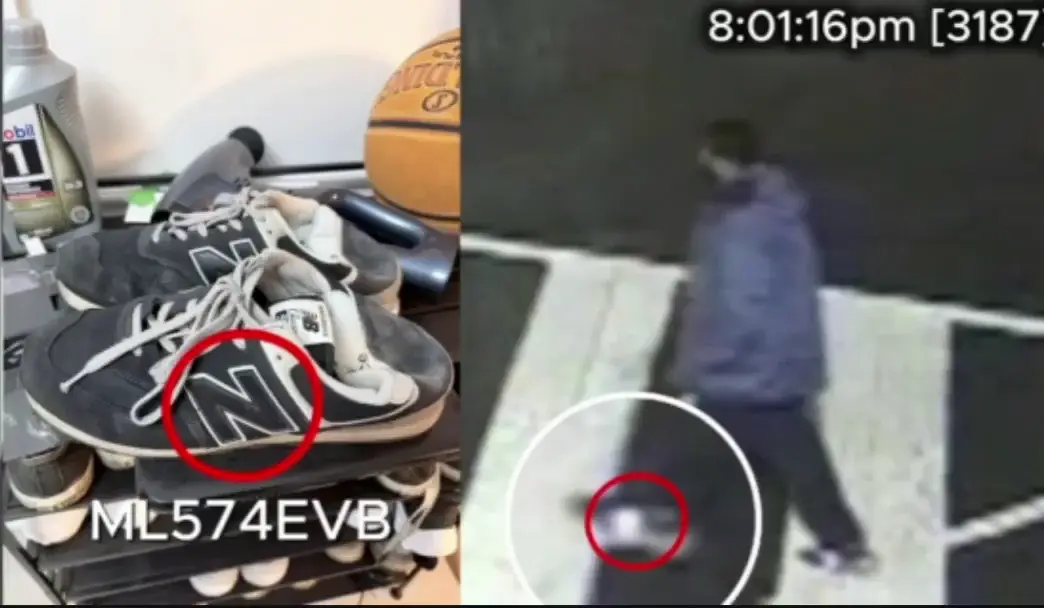
| Shoes and heel-walking | Baker identifies Brian’s shoes as size 12-D New Balance ML574EVB. Hanneman and Baker’s sidewalk measurement puts his feet at size 12 to 12.5. | Baker and Hanneman attribute the New Balance shoes and heel-striking walk to Brian/the northwest figure. The hooded-figure footwear comparison is separate. Neither product reference nor low-resolution comparison independently establishes identity. See the images |
| Burgundy-and-gold mask | His mother told Baker she made the family’s masks in his favorite team’s colors. | Baker reports that his mother recognized the masks she sewed in Washington Football Team burgundy and gold. Reporting [8] |
Our position: Brian is 100% innocent. The attributed northwest identification and family account support the defense case, but the model does not establish identity, and the available exports have not independently established synchronized simultaneous appearances. The prosecution must prove its accusation. Brian’s defense does not require proving who else was on camera or guilty.
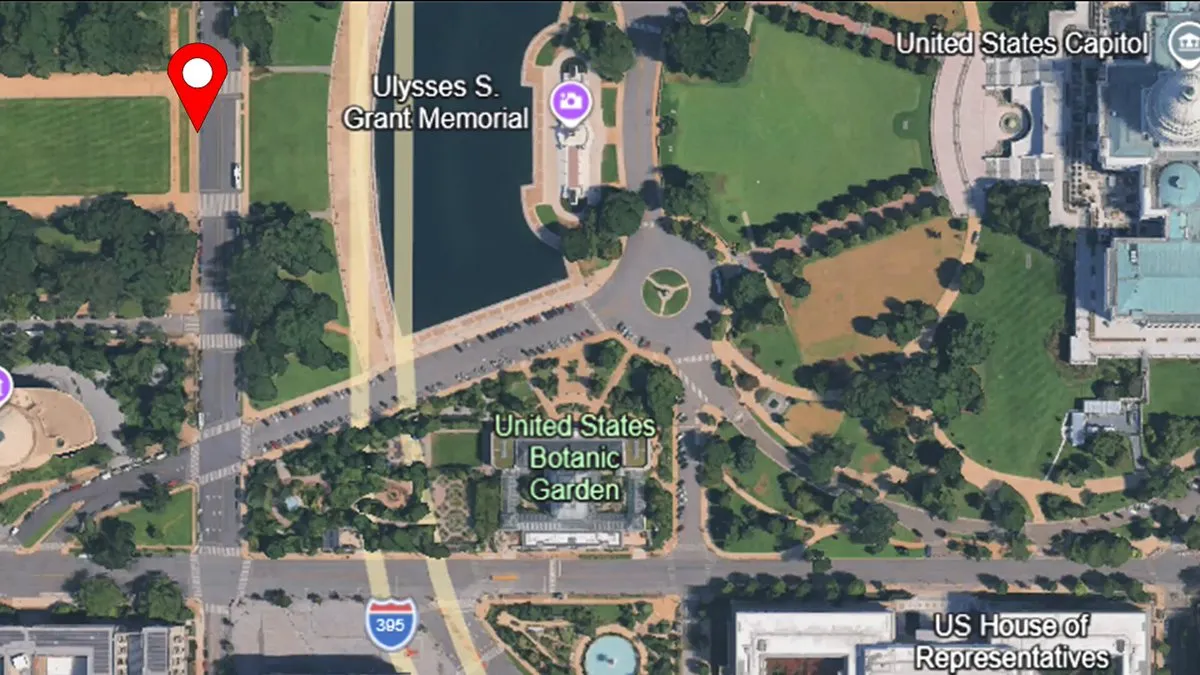
The published comparison labels the northwest sequence as Brian and the southeast figure as the hooded suspect during the same evening window. The recovered exports show separate geographic scenes. They do not, by themselves, establish that the selected people appear simultaneously or are continuously tracked. [20] Watch the visual case.
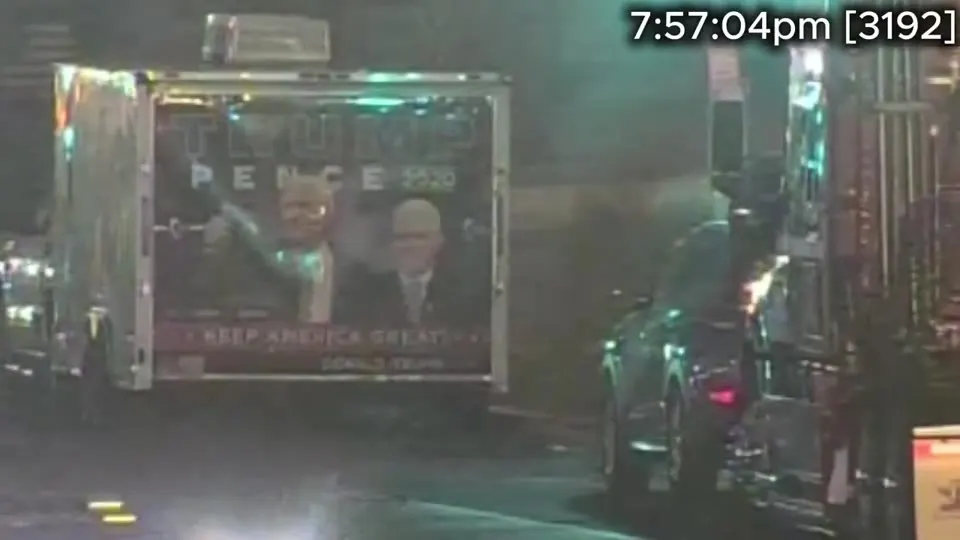
The times below are published anchors based on export filenames and playback. They are not demonstrated synchronized camera clocks; the route-source review explains the limits. Read the complete source audit.
| Clock | Gray-hoodie suspect, per the complaint | Person in the October 18 video |
|---|---|---|
| 7:54 p.m. | Device placed at the DNC, on the southeast side. | — |
| 7:57:04 p.m. | Published comparison uses camera 0794, New Jersey–D Street SE. | Camera 3192, 3rd–Pennsylvania NW. Baker identifies the person as Brian; the source exports do not independently confirm that identity. |
| 7:59:33–38 p.m. | The complaint reports a phone transaction at :36 and a suspect sighting at New Jersey/E Street SE at :38. | Camera 3188, Peace Circle NW. Baker and Armitas attribute a northwest figure to Brian; source clips do not independently confirm identity. |
| 8:01:16 p.m. | — | Camera 3187. A person in a light-colored jacket crosses a street; Baker identifies that person as Brian. |
| 8:16 p.m. | Device placed at the RNC. Last video of the device-placer is about 8:18 p.m., walking east on Rumsey Court. | — |
The northwest sequence continues through cameras 0600, 0601, 0602, and 0940, with published anchors from 8:01:33 to 8:05:23 p.m. Baker and Armitas attribute the northwest sequence to Brian; the southeast route is the complaint’s alleged device-placer route. Those identifications and their clock relationship remain attributed and subject to source-level testing.
The recovered export labels resolve the earlier northwest/northeast ambiguity for these cameras: the comparison sequence is northwest. Open the interactive camera-and-cell map or read the source analysis, including clock limits and coverage gaps.
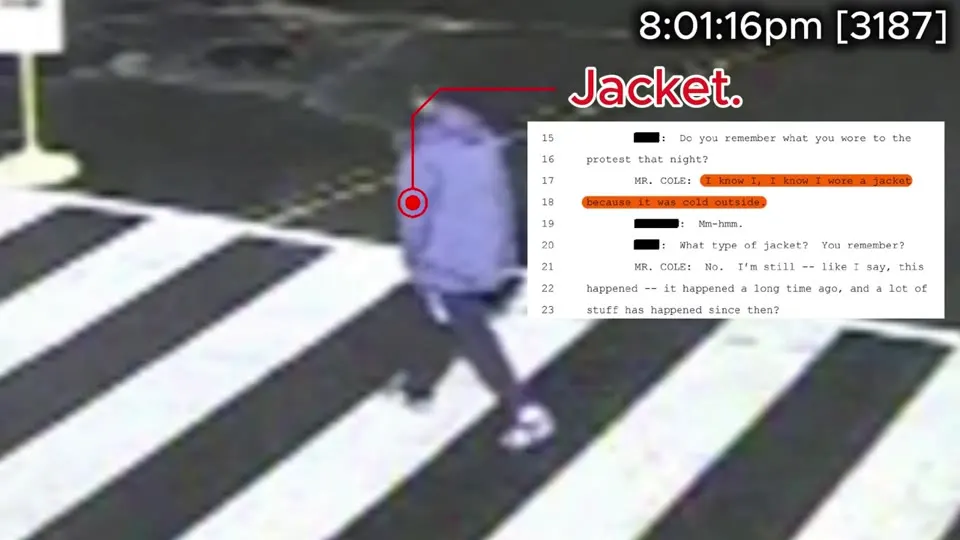
Baker reports that Loretta Cole recognized a coat she had bought Brian about two weeks before January 5, using her Kohl’s card, with its retail tag still hanging from it. This is a specific family identification as reported by Baker, and it supports the defense account; it is not a result of the statistical model or an independently authenticated identification in this review. [10]
Delicia Cole told Baker she sewed the family’s masks in Washington Football Team burgundy and gold because Brian disliked plain white N95 masks. Baker says she cried when shown a screenshot. That account supplies another identifying detail to examine against the footage. [8]
Baker reports family recognition of the coat and attributes the northwest figure to Brian. The full camera run is necessary to test continuity, identity, and timing. We believe Brian is 100% innocent; the government has not established that he was the hooded figure. Our defense does not depend on identifying another person. [8] Read the separate identification of the hoodie.
The defense starts by testing the government’s identification against the location and source record. Shoes, forensic evidence, vehicle, phone, and purchases are separate questions. None should stand in for a reliable identification.
The complaint describes the device-placer as wearing a grey hooded sweatshirt, dark pants, dark gloves, Nike Air Max Speed Turf shoes, a face mask, eyeglasses at times, and a backpack. The October 18 video’s 8:01 p.m. subject is marked as wearing a light-colored jacket. Baker says the shoes are the New Balance pair he photographed, width D, style ML574EVB, which he identifies as Brian’s size 12-D, and that the subject walks on his heels. [7] [8]
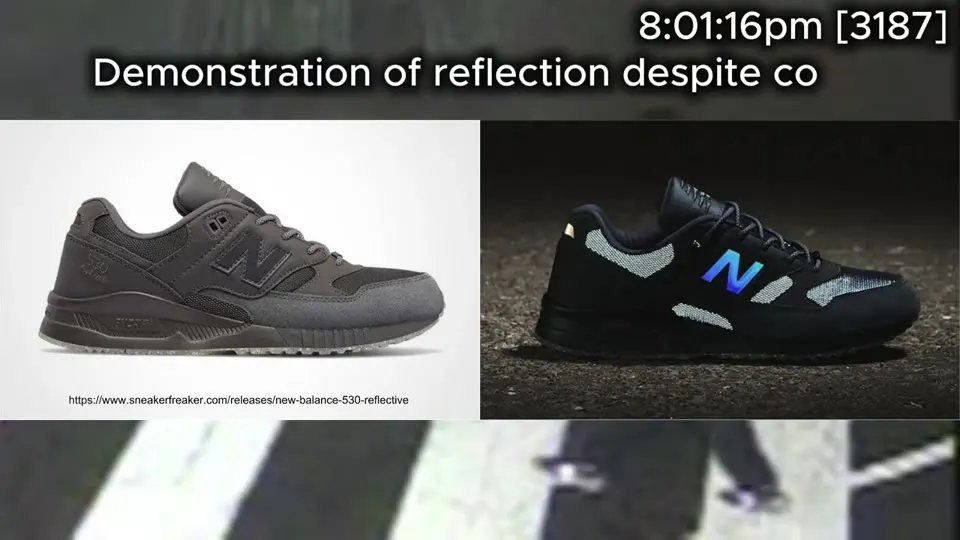
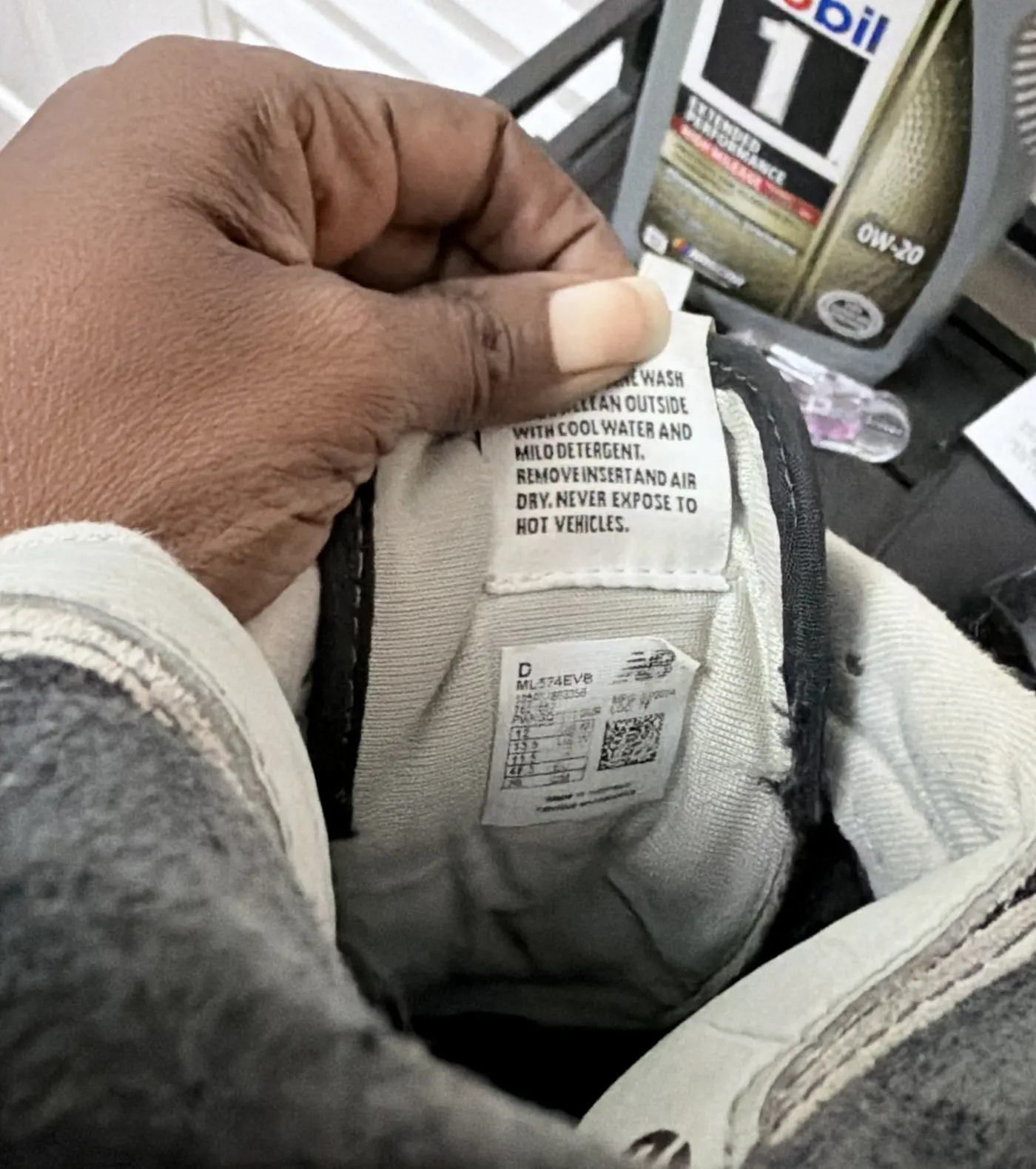
On March 23, 2026, Baker and Joseph Hanneman published a comparison arguing that gait and footwear distinguish Brian from the hooded figure. They describe Brian’s feet as angled out and the hooded figure’s feet as angling in, crossing, and dragging the right leg. Their sidewalk measurement estimates Brian’s feet at size 12 to 12.5 and compares them with the hooded figure’s Nike Air Max Speed Turf shoes; Baker’s May 21 field comparison makes a similar claim. These are attributed visual and measurement arguments, not a validated exclusion. The underlying source clips, calibration, and shoe-size estimates require independent review. The same reporting quotes FBI operational updates describing two eyewitnesses who called the gray-hooded person a white male; the underlying updates should be checked directly. Brian is Black. [12] [39] Build the separate hooded profile.
Watch two public site-created motion examples on the frame desk. Their source identities, timing, and illustrative geometry have explicit limits; the detailed metric-model workspace remains access-controlled.
The complaint’s reported camera estimate—about 5 feet 7 inches including headwear, ±1.1 inches—overlaps Brian’s listed 5 feet 6 inches. Height establishes neither identification nor exclusion. The gait, shoe, and route comparisons are attributed claims and must be assessed against their source records.
Bottom line: the reviewed public record supplies no identified DNA or fingerprint match to Brian. That leaves a missing physical connection, not a laboratory finding that excludes him. Obtain the underlying reports to distinguish untested, inconclusive, and exclusionary results.
The public filings reviewed for this site do not identify a DNA or fingerprint match tying Brian to either device. Gloves on the device-placer are the government’s explanation for a missing print. They do not identify who wore the gloves or establish the identity of a separate person in another camera view. Filed record [20]
The government’s accusation must be tested against the source record. Baker and Armitas attribute a northwest figure to Brian; the complaint describes the hooded figure on a southeast route. The model estimates conditional description-match frequencies only—it does not identify either person or prove simultaneous separation. Inspect both source views and the timing limits. Watch the source footage.
The affidavit and January 23 filing report a license-plate-reader observation around 7:10 p.m. at the South Capitol exit from I-395 South. They do not describe that observation as a sighting at either device. Baker separately says Capitol Police cameras show Brian’s car about a mile away, entering I-395 toward Virginia while the hooded figure remains on foot. That is his reported comparison, not a car track independently authenticated here. [20] [36]
Hanneman and Baker’s February 6, 2026 article is the fuller account of the cars. They credit Armitas with three blue Nissan Sentras on Capitol Hill between about 7 and 8:10 p.m. One had a white driver and a white passenger. One near Folger Park after 7 p.m. had its fog lamps on. Brian’s 2017 Sentra does not have fog lamps; they cite the National Motor Vehicle Title Information System and photographs of his car. The third car, which they call a visual match to his, is northbound on 3rd Street SW at 8:03 p.m. on cameras 3823 and 3821, turns east on C Street, and is last seen at 8:04 p.m. on camera 8483 entering I-395, away from Folger Park. They put that spot six to seven minutes’ drive from the park. This site has not independently timed those cameras. [41]
An October 20 essay retracts an earlier use of a matching Sentra as the doubt, because the October 18 film puts Brian on foot northwest. It then restates those 8:03 minutes and says his car is not seen on Capitol Police cameras driving toward Folger Park. The same essay puts the fog lamps on Brian’s car and takes them off the Folger Park Sentra. That is the reverse of the February 6 article, which is the account followed here. A car on 3rd Street SW is not the hooded person on the southeast side. The man on the northwest film is the alibi. [40]
A serving sector does not identify the person in the hoodie or place Brian at either device. The affidavit lists seven data-session transactions at six distinct times. These can include background app traffic; they are not necessarily calls or texts Brian initiated. A connection identifies a serving sector, not a precise place where the phone was held. [20]
One sector was listed at 345° in the February 2021 provider list and 90° in the April list—a 105° difference, more than a quarter turn of the compass. The government says the earlier listing was an error and cites January and February drive tests. Those measurements are needed to evaluate its explanation.
The research has recovered the filed map and the government’s account, but not the full carrier records or drive-test data. Being outside a drawn sector wedge alone does not prove the phone could not connect there: the affidavit acknowledges that actual coverage varies.
On the filed transcript, page 111, Brian answers a question about phone use by saying he was watching a Star Wars-related YouTube clip. That is an interview statement, not a carrier record. The October 20 essay says the hooded person pulls out a phone at that moment and that Brian’s phone does not ping. The seven transactions are the affidavit’s list. They are not a test of that sentence. [21] [40]
The point: the phone evidence must be tested against the footage. A tower map cannot, by itself, identify the person in a hoodie. Read the seven-transaction audit, the 105° listing difference, and the government’s answer.
Read the filings and seven transactions →Bottom line: test each purchase individually. A matching product type can reflect ordinary shopping rather than bomb-making. For earlier purchases, ask what establishes ownership, intended or actual use, and a connection to a recovered component. Lawful use is a hypothesis to investigate, not a fact established for every item.
The purchase chart includes items bought after January 5, 2021—even into 2022. Those particular purchases cannot be components already planted on January 5. The government also lists earlier purchases of matching component types; those must be tested on their own evidence, not erased by the later dates.
The affidavit describes cash purchases during a December 2019 Micro Center transaction without stating the public method that ties the cash sale to Brian. It names three additional credit cards with a longer records window, but does not assign each purchase to a card or say when those cards were discovered. Armitas questions their origin. The filings say they were “used by” Cole; a newly disclosed record window is not proof of a newly created or fraudulent card. See the account windows.
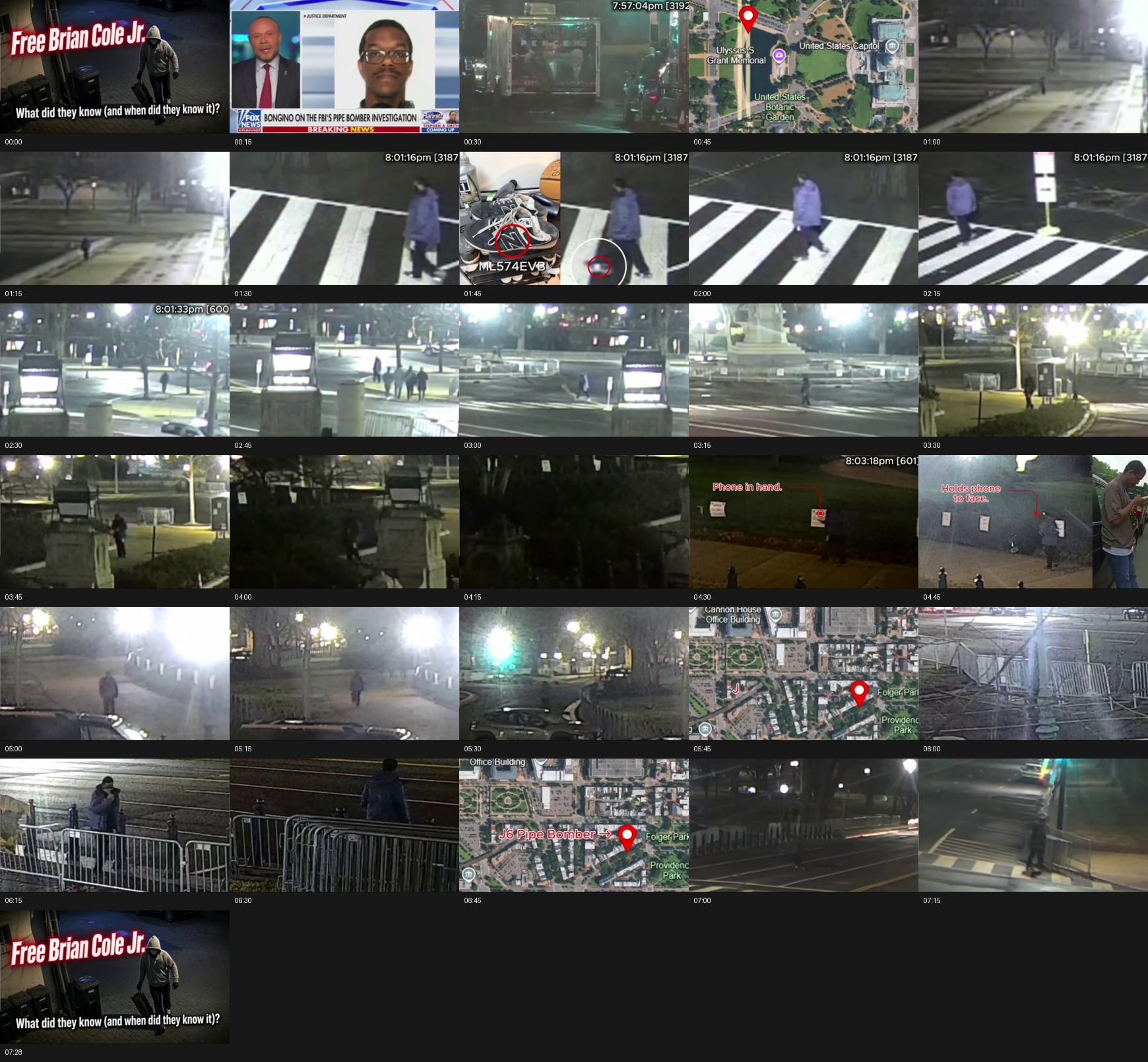
Inspect the purchases against the actual device parts →MMH (@MMHowell87) posted this compilation on October 20. It opens with a television clip of Dan Bongino discussing the investigation, then presents Capitol surveillance excerpts, maps, and comparisons involving shoes, clothing, and phone use. The identification of the person as Brian and the comparison graphics are the presentation’s claims. [15]
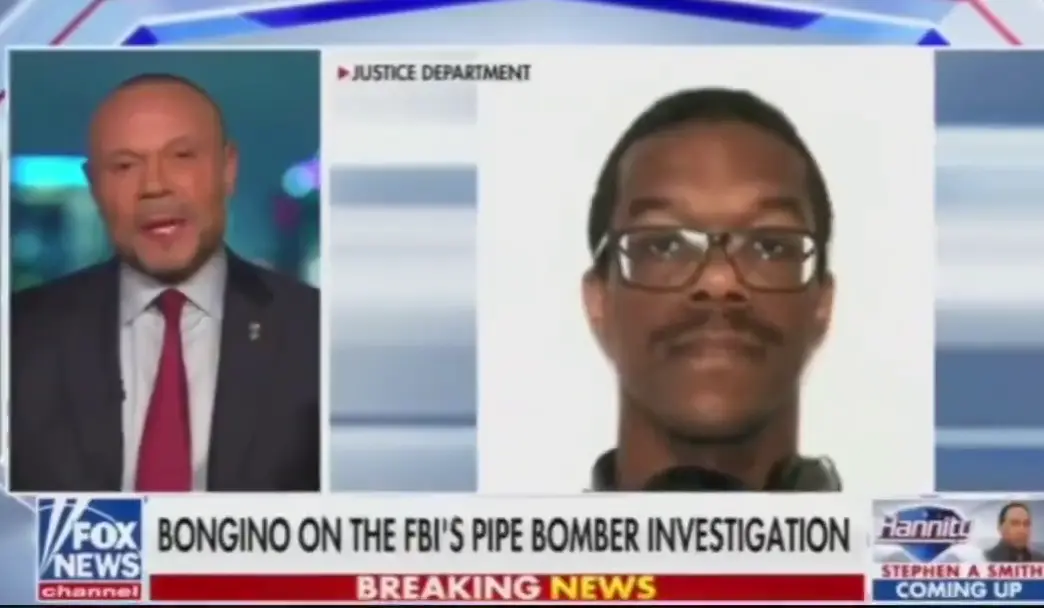
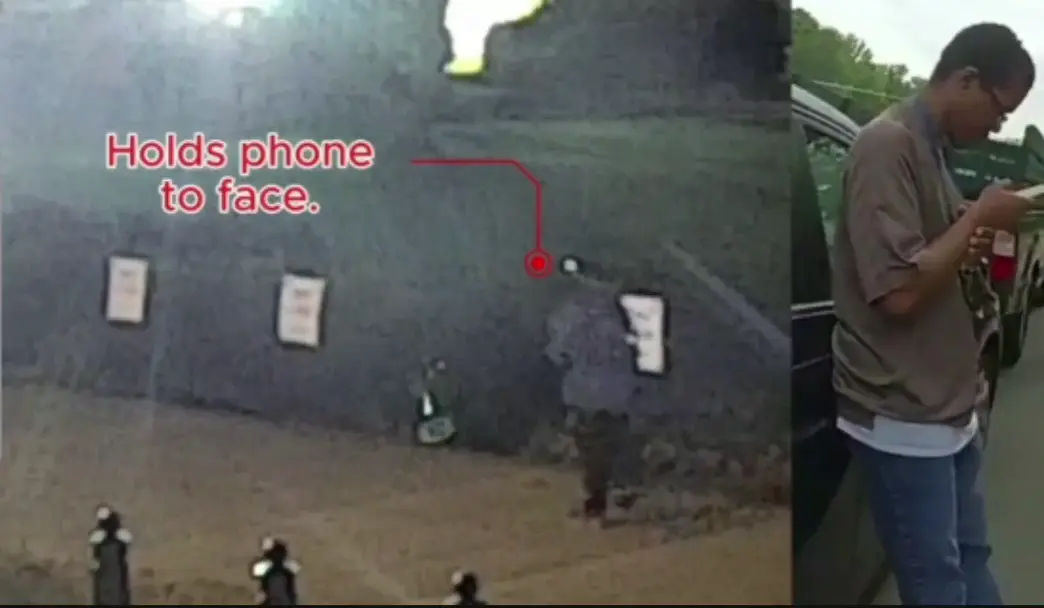
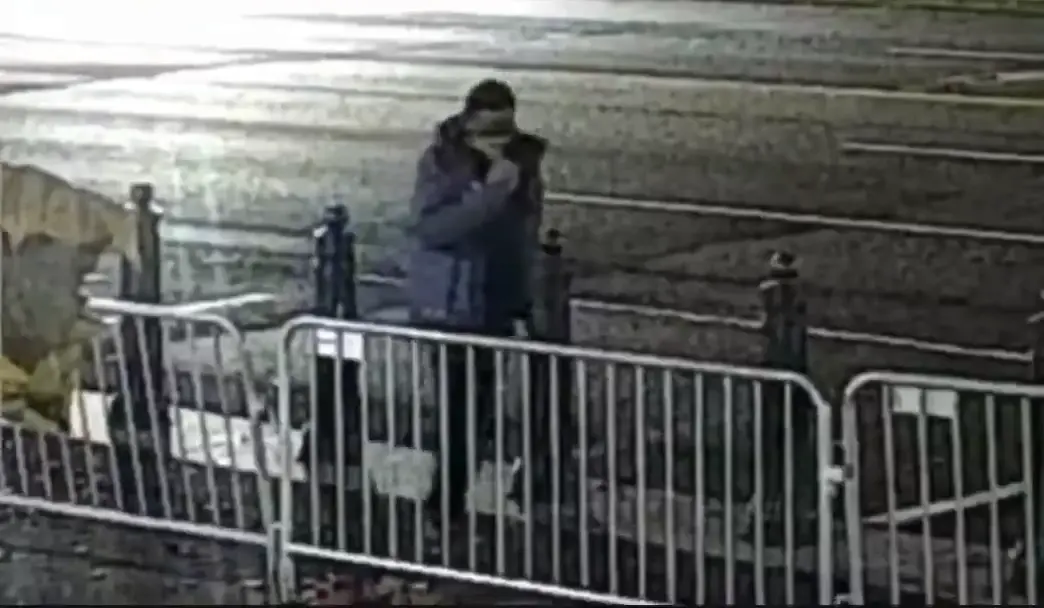
View the 31-frame contact sheet, sampled every 15 seconds with a closing frame at 07:28. The stills preserve the source video’s framing and annotations.
Bottom line: Brian’s defense should be able to examine the location records behind this reported alternative lead. The account below is attributed reporting; it does not independently establish the phone’s user or the device-placer’s identity.
The text accompanying MMH’s video points back to Steve Baker’s September 1, 2026 report about a briefing in Rep. Barry Loudermilk’s office on October 16, 2025. Baker lists Marshall Yates, Loudermilk, Rob Adkerson, former Capitol Police Chief Steven Sund, a retired deputy chief, and John Solomon as attendees. Baker says a whistleblower who attended described Yates discussing a redacted FirstNet phone number located within three meters of both device-placement sites. Baker attributes the words “We knew then it was a law enforcement person” to Yates through that source. FirstNet is the public-safety network. The proposed connection to a former Capitol Police officer is an alternative hypothesis, not an established identification. [16]
Baker quotes November 5, 2025 texts he attributes to Loudermilk: “It is circumstantial, but it points to USCP involvement” and “If you have this right, I don’t believe the individual acted alone.” The lead points at Capitol Police. The walker the stride study named is a Capitol Police officer.
Baker is the reporter of the briefing. Joe Hoft’s September 3 article repeats that account. The location records belong in Brian’s defense file. What is already public is the conclusion Yates is reported to have drawn: a law-enforcement person. Read the reporting.
CNN’s March 1, 2025 review links to Bongino’s podcast episodes and quotes him saying, “Folks, this guy was an insider. This was an inside job.” In another passage, he predicts authorities would call the devices a training exercise, then rejects that explanation: “No, this was not a training. This was an effort to frame MAGA people.” That is what he said then. It is not proof of an inside job. The specific “unimpeachable intelligence sources” wording in MMH’s caption was not verified in the reporting reviewed here. [17]
Separately, Steven Richards and Solomon reported on September 30, 2025 that Loudermilk was exploring a training-exercise or police-diversion theory. Their article discusses AT&T/FirstNet data-preservation problems and links to documents; it predates the alleged October 16 briefing. [18]
Solomon’s later government role is documented by WABC’s July 9, 2026 interview, which identifies him as an unpaid White House special government employee leading a transparency task force. Yates’s profile, reviewed October 20, describes his FBI congressional-affairs role as former. Neither fact independently verifies the briefing account. [19]
Baker’s October 22 thread says the pipe bomber was a cop, and he calls the walker “she.” He reads a handgun outline, a high-center police-radio microphone, and body armor beneath the hoodie. Seraphin says agents seized no gun from Brian. Those are the presenters’ claims; the blurred footage does not independently confirm the equipment or the wearer. See the separate profile.
Steve Baker posted the thread with a long video and five stills. Kyle Seraphin posted the gun follow-up the same day. [34] [25]
Why it matters: if the equipment reading holds up, it would support a law-enforcement profile rather than identify a particular officer. The stills are coarse night video; Baker’s thread supplies the interpretation. His posts [34]
The December 4, 2025 complaint charges 18 U.S.C. §§ 844(d) and 844(i). None of the filings reviewed on this site includes a § 924(c) count. The absence of that count does not establish whether the person carried a firearm. [7]
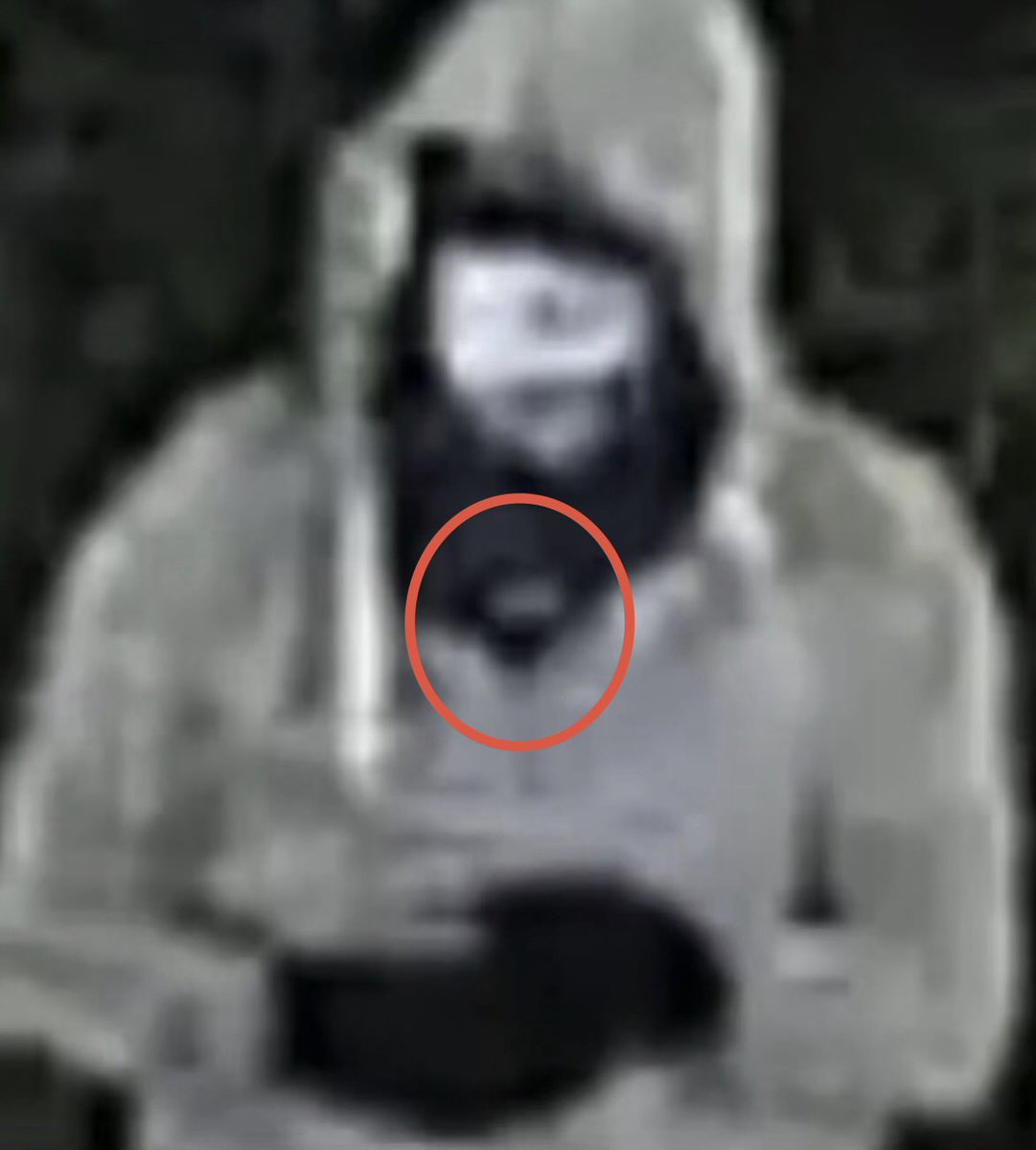
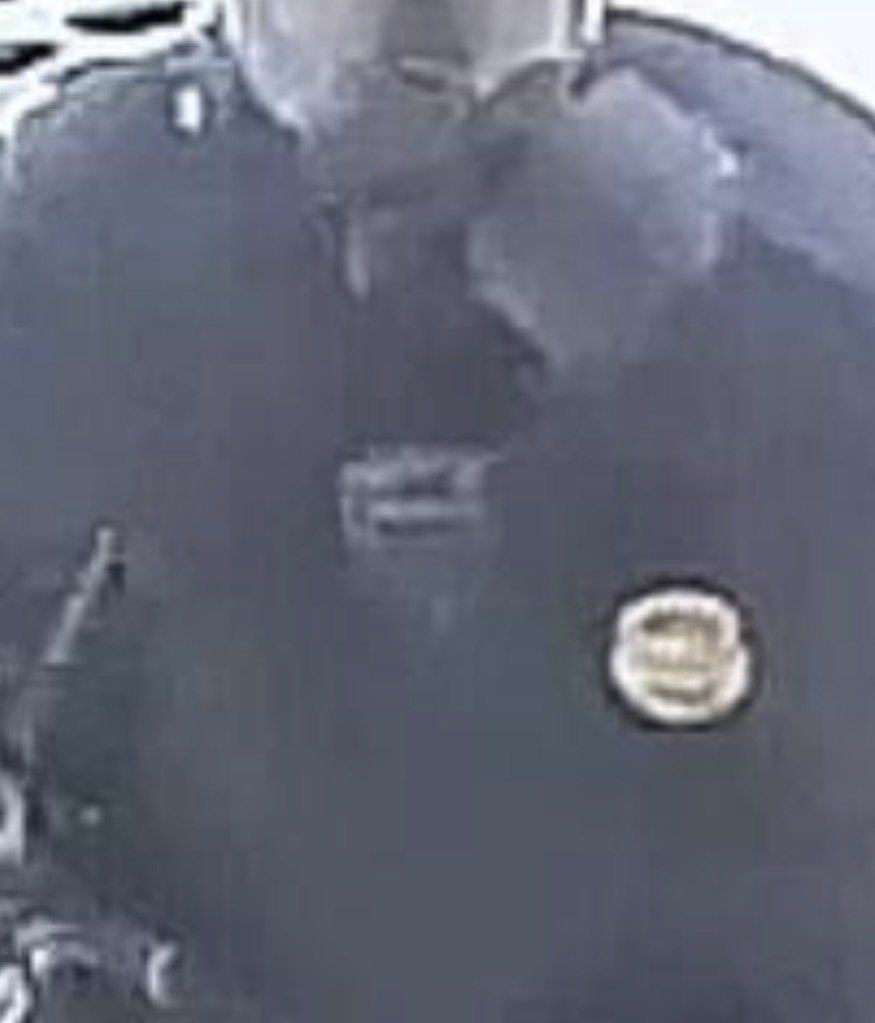
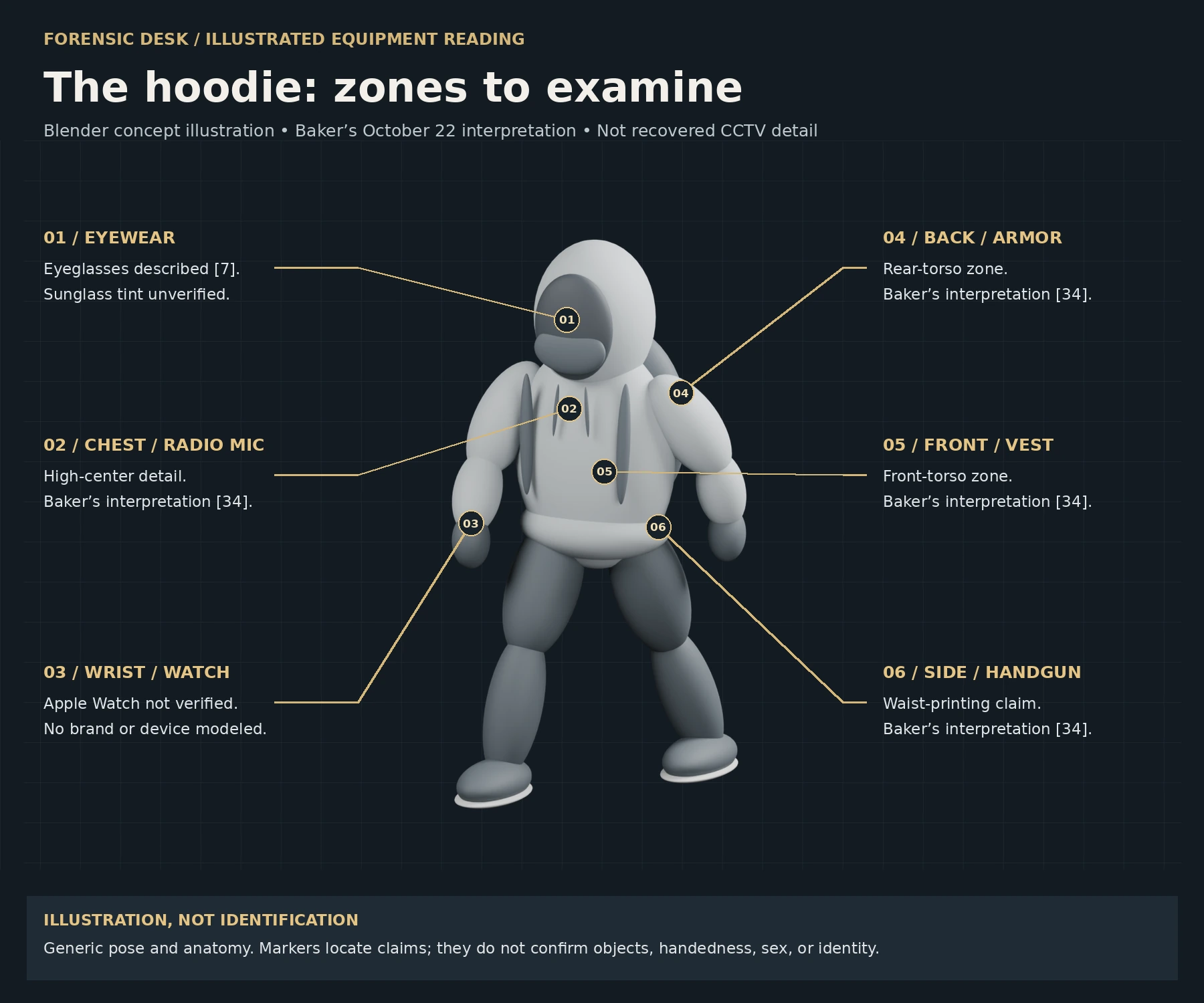
The source stills are above. The January 27 DVIDS duty-belt photograph supplies the separate documented police-equipment reference. Neither that photograph nor this illustration turns a blurred detail into a confirmed object.
Read this with the clothing and shoe comparison and the two clocks. The northwest family identification is the core alibi evidence. The proposed female and police-equipment profile is a separate argument, not a prerequisite for Brian’s innocence.
The archive lists a Massie post from the same day as a letter about the CCTV, and an Armitas reaction. Those pages were not retrieved, and the reaction image was not in the download. This site does not describe a letter it has not read. The other three stills are in the research folder with the two shown here.
Baker and Armitas published a 26-minute compilation of Capitol Police radio over CCTV. Baker says Lt. Dan Turner, whose bureau includes the bomb squad, watched the DNC from the Fairchild Building for about 19 minutes after the RNC report and during the calls that sent available units to the west front. He names special agents Ronald Ridgley and Don Hankins at the discovery, and he asks whether Turner already knew the spot. The complaint does not name these officers. This review did not check a roster. [44]
The soundtrack is the radio, not a narration. An automatic transcript hears the RNC picture call, the west-front emergency, and then an on-air declaration of a similar device at the DNC, at Canal and Washington, in the bushes, after a time hack heard as 1306. It does not hear Turner’s name. Baker’s 1:05 and 1:07 markers, the fist bump, and the claim that the scene was left uncordoned are his reading of the pictures. The linked Vimeo is Hanneman’s January 5 clip of the hooded person at the Congressional Black Caucus Institute bush. Research note · What it does, and does not, change in court.
The now-retracted Blaze report named Shauni Kerkhoff and reported a 94% gait score, with the analyst claiming a 96–98% visual match. Those are not independently validated probabilities of identity. Her roster lists 5 feet 7 inches. The FBI investigated her and recorded a polygraph opinion of “Deception Indicated”; neither height nor a failed polygraph establishes guilt. Kerkhoff denies the allegation. [27] [28] [32] [31]
The prosecution’s August 28, 2026 answer says the podiatrist reached no conclusion, the investigation found zero evidence connecting her to the devices, and a home video places her voice in Falls Church at 7:37:48 p.m. The defense is in court to test that account. Neither an untested timestamp nor a polygraph is a conviction, and neither identifies Brian. [31]
No court has adopted this site’s identification, and Brian has pleaded not guilty. [30] [5]
Read the identification →The government relies on purchase records, cell-site evidence, a vehicle sighting, and statements it treats as admissions. None of those items is her face in that sweatshirt. The purchase list is charted on its own page: cash, purchases after the devices were planted, and the three additional cards do not line up with the parts the affidavit says were in the two bombs. Read the purchase chart. The recovered affidavit and January 23 filing report a license-plate-reader observation around 7:10 p.m. at the South Capitol exit from I-395 South. That is not a sighting at either device. In a May 23, 2026 interview, Baker says Capitol Police cameras show Brian’s car a mile away, entering I-395 toward Virginia, while the hooded figure is still on foot. The vehicle section sets that reading beside the February 6 account of which Sentra is his. The October 20 essay reverses the fog lamps; that reversal is not followed here. [20] [36] [41] [40]
The government calls the December 4 interview a confession. Brian’s lawyer, Mario Williams, told Hanneman and Baker on January 16, 2026: “Not true. … That interview, we do not consider a confession at all,” and “I say he’s the wrong person.” The cameras do not move because an agent wrote down an answer. The hoodie is on the southeast side. The man his family recognizes is not. [21] [35]
His family recognizes him on the northwest footage, in the coat his grandmother bought. That is the alibi this site advances. The separate, disputed Kerkhoff comparison does not have to become a conviction for Brian’s identification to be challenged.
The gait clips, Michael Nirenberg’s file, the home video and its metadata, the carrier records, and the drive tests belong in the defense’s hands in time to use them. These are the records behind the identification that excludes Brian and the prosecution’s answer to it—not a generic disclosure request. The government says the home-video materials were already produced under a protective order; their absence here does not establish nondisclosure. [31] [20] Read the demands for his freedom.
“To keep him imprisoned is criminal.”
Rep. Thomas Massie, on the CCTV, October 18, 2026
The family identification, the footage, the clocks. His defense needs the records and experts to carry the case for his freedom into court.